Darknet Markets 2026:
The dark web is part of the deep web but is built on darknets: overlay networks that sit on the internet but which can't be accessed without special tools or software like Tor. Tor is an anonymizing software tool that stands for The Onion Router — you can use the Tor network via Tor Browser.
| Darknet Market | Established | Total Listings | Link |
|---|---|---|---|
| TorZon Market | 2022 | 140+ | Onion Link |
| Nexus Market | 2024 | 600+ | Onion Link |
| Abacus Market | 2022 | 100+ | Onion Link |
| Ares | 2026 | 100+ | Onion Link |
| Cocorico | 2023 | 110+ | Onion Link |
Updated 2026-10-27
How Tor and Crypto Keep Darknet Trade Safe and Running
The operational foundation of a modern darknet market is its use of the Tor network and its .onion services. This architecture provides a resilient and anonymous platform by design. Access to these services requires the Tor browser, which routes connection data through multiple encrypted layers, analogous to an onion. This process obscures both the user's location and the server's physical location, creating a private network segment that is difficult to trace or shut down permanently. The resilience comes from the decentralized nature of Tor; if one node or server is compromised, the service can migrate to a new .onion address with relative ease, maintaining continuity for its user base.
This privacy infrastructure is paired with a specific financial technology: cryptocurrency, primarily Bitcoin and Monero. Cryptocurrencies enable a decentralized form of value transfer that does not rely on traditional banking systems. For the user, this means transactions are not directly linked to their personal identity. Markets encourage the use of wallets with strong privacy practices, such as using new addresses for each transaction and employing tumbling or coin mixing services. The combination creates a secure loop:
- The .onion address hides the activity's origin and destination.
- The cryptocurrency transaction hides the financial trail.
The shopping process leverages these technologies for safety. A buyer navigates to the market's .onion site using Tor, browses vendor listings, and selects items. Payment is made to a secured escrow system held by the market administrators. The vendor sees the secured payment and ships the product. Only after the buyer confirms receipt are the funds released from escrow to the vendor. This system reduces fraud and builds trust without requiring personal information. The entire transaction exists as encrypted data packets routed through Tor and recorded on a blockchain ledger under pseudonymous addresses, making the act of shopping both private and secure from external observation.
How Cryptocurrency Makes Darknet Trade Efficient
The operational model of darknet markets is fundamentally built on a dual-layer architecture of privacy. The first layer is network anonymity provided by onion services, which conceal the physical location of the marketplace servers and encrypt all traffic between the user and the site. This makes takedowns based on server location technically challenging. The second layer is financial privacy achieved through cryptocurrency transactions. Unlike traditional banking, cryptocurrencies like Bitcoin and Monero facilitate pseudonymous value transfer without requiring personal identification from a central authority.
This combination allows for efficient trade in goods that are regulated or prohibited in various jurisdictions. The process is streamlined:
- A buyer accesses the market via the Tor browser, ensuring connection anonymity.
- Cryptocurrency funds are placed into a multisignature escrow system controlled by the market software, protecting both buyer and vendor.
- After the vendor ships the product, the buyer finalizes the order, releasing the funds from escrow.
How Escrow Makes Darnet Drug Deals Safe and Trustworthy
Escrow is the fundamental mechanism that enables trust in anonymous environments. When a buyer places an order, their cryptocurrency payment is held by the market's escrow system, not released directly to the vendor. This creates a secure intermediary, ensuring that the vendor must ship the product to receive the funds. The process relies on the cryptographic security of the onion service platform itself, which acts as a neutral third party.
The transaction flow follows a clear sequence:
- The buyer selects a product and sends payment, which is locked in a multisignature escrow or a market-managed wallet.
- The vendor is notified and dispatches the order, providing proof to the system.
- Upon successful delivery, the buyer finalizes the order, releasing the escrowed cryptocurrency to the vendor.
This model effectively mitigates fraud by disincentivizing vendors from failing to ship products, as they only receive payment after the buyer confirms receipt. For the buyer, it eliminates the risk of sending funds directly to an unknown party. Disputes are managed internally through market administrators, who review communication and evidence before adjudicating the release of escrowed funds. The entire process is encrypted and conducted within the onion service, preserving the anonymity of all participants while facilitating efficient trade.
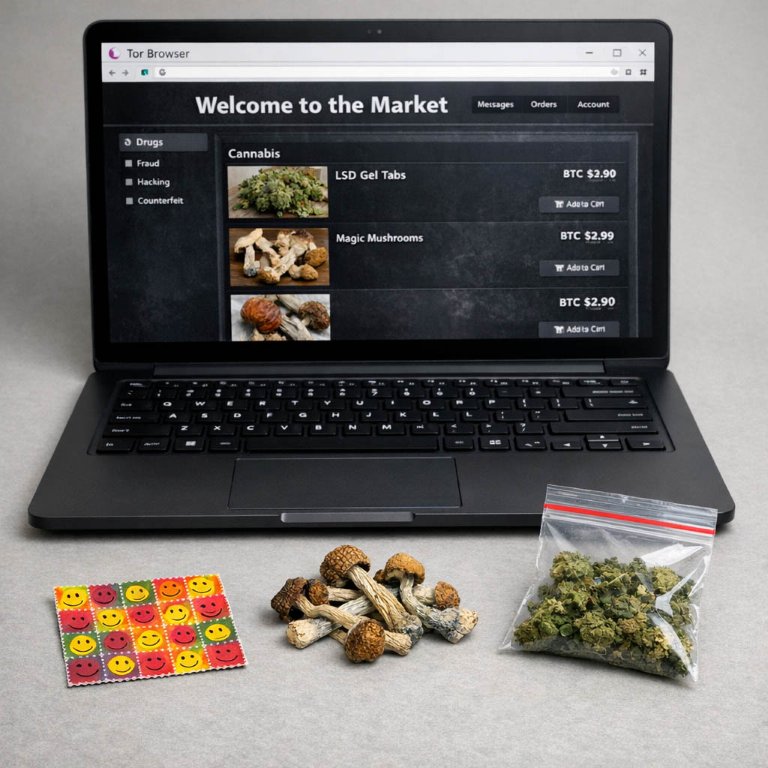
How Darknet Markets Keep Drug Sales Private and Secure
The operational foundation of modern darknet markets is the integration of onion services and cryptocurrency. This combination creates a robust framework for safe and private commerce. Onion routing, facilitated by the Tor network, encrypts and anonymizes all traffic between the user and the market server. This process makes it exceptionally difficult for any third party to determine the physical location of the market or the identity of its visitors and participants.
Transactions are secured through the use of cryptocurrencies like Bitcoin and Monero. These digital currencies function without the need for traditional financial intermediaries, allowing for pseudonymous transfers of value. While Bitcoin offers a high degree of privacy, its blockchain is public, which has led many markets and users to prefer Monero for its stronger, built-in cryptographic privacy features that obscure transaction details by default.
Markets enhance security further with several key practices:
- Mandatory use of PGP encryption for all sensitive communication, ensuring that only the intended recipient can read addresses and messages.
- The implementation of multisignature escrow systems, which require multiple keys to release funds, reducing the risk of theft by a single party.
- Continuous code updates to patch vulnerabilities and resist DDoS attacks, maintaining platform reliability and uptime.
This technical environment empowers users to engage in trade with significantly reduced risk of exposure. The market's design places control over personal information directly in the hands of the user, who manages their own encryption keys and cryptocurrency wallets. The result is a self-contained economic system where privacy and security are not optional features but fundamental, built-in prerequisites for all transactions.
How Dispute Resolution Makes Darknet Trade More Secure
The operational framework of a darknet market is engineered to facilitate secure commerce between parties who cannot rely on conventional legal systems. A central component of this design is the built-in dispute resolution mechanism, which functions as a private arbitration system. When a buyer reports an issuesuch as not receiving a product or receiving an item that does not match its descriptionthe market's escrow service temporarily freezes the cryptocurrency payment.
The disputed transaction is then assigned to a market moderator. This moderator reviews evidence provided by both parties, which can include encrypted communication logs and product photographs. The moderator's decision determines whether the funds are released to the vendor, returned to the buyer, or split in a compromise. This system directly addresses the core challenge of enforcing agreements in an anonymous environment.
By providing a structured process for conflict resolution, markets create a foundation for trust. This reduces the incentive for fraudulent activity by vendors, as they risk losing funds held in escrow and damaging their reputation. For buyers, it offers a recourse beyond the initial transaction, making participation in the digital economy a more calculated and secure endeavor. The effectiveness of this system is publicly reflected in vendor feedback scores and resolution histories, allowing all users to assess reliability before engaging in trade.

How Vendor Reputation Builds Trust on the Darknet
The vendor reputation system is the cornerstone of self-regulation on darknet markets. It functions as a decentralized mechanism for quality control and trust, replacing the need for a central authority to police transactions. Each completed order allows a buyer to leave detailed feedback on product quality, shipping speed, and communication. This feedback, aggregated into a public score and often accompanied by written reviews, creates a transparent record of a vendor's reliability.
A vendor with a long history of positive feedback and a high score gains a trusted status. This status directly translates into economic incentive: more sales, the ability to charge premium prices, and prominence in market listings. Conversely, a vendor who engages in scamming, sells inferior products, or fails to ship orders quickly accrues negative feedback. This leads to a loss of customer trust, a declining score, and eventual obsolescence as buyers simply select more reputable alternatives. The system creates a powerful economic disincentive for malicious actors, as building a positive reputation requires consistent, honest service over time.
The technical infrastructure of the darknet supports this model. Transactions are secured by cryptocurrency and escrow, with funds only released to the vendor upon buyer confirmation. The immutable nature of blockchain ensures feedback and finalization cannot be forged unilaterally. Combined with the anonymity provided by onion services, which protect the identities of both parties, the reputation system reduces the risk of fraud to a manageable level. It establishes a predictable environment for trade where the community collectively enforces standards, fostering a stable marketplace for efficient exchange.
How Darknet Markets Keep Getting Better
The operational resilience of a darknet market is not static but a product of iterative development driven by adversarial pressure. This evolution is most evident in the symbiotic relationship between onion services and cryptocurrency, which together form a self-reinforcing cycle of enhancement. The inherent design of the Tor network, with its frequent rotation of introduction points and rendezvous points, provides a foundational layer of anonymity that is constantly audited by the global community of users and developers. Markets leverage this by implementing custom server configurations and load-balancing techniques to maintain uptime despite distributed denial-of-service attacks, directly improving shopper access and platform reliability.
Cryptocurrency protocols undergo their own independent upgrades, such as improved transaction privacy features or the advent of more efficient layer-2 solutions. Progressive markets rapidly integrate these advancements, migrating from basic Bitcoin transactions to the use of Monero (XMR) or Bitcoin with CoinJoin to obscure financial trails. This integration necessitates continuous backend refinement of payment processors and wallet systems, reducing transaction failures and protecting both vendor revenue and customer funds. Each financial privacy upgrade forces a corresponding improvement in market infrastructure, creating a more robust economic environment for trade.
The feedback loop is closed by direct user experience. Forums and market support tickets provide critical data on interface flaws, escrow disputes, or listing inaccuracies. Administrators analyze this data to deploy incremental fixes, such as:
- Optimizing search algorithms for product discovery
- Automating multi-signature escrow release upon finalization
- Refining PGP encryption workflows for communication
This process transforms user-reported issues into concrete software patches. The result is a platform that becomes more intuitive and fault-tolerant over time, lowering the technical barrier for safe and private shopping. The decentralized nature of both the hosting technology and the currency means improvements are distributed and adopted organically, ensuring the ecosystem's longevity and functional stability without centralized oversight.

Keeping the Darknet Market Open for Business
The operational resilience of darknet markets is fundamentally tied to their accessibility, which is engineered through the integration of onion services and cryptocurrency. This architecture ensures a consistently available platform for voluntary trade by circumventing traditional geographic and regulatory barriers. The Tor network provides the foundational layer, allowing marketplaces to host services on domains that are not easily subject to takedown by conventional means, thus guaranteeing a stable point of entry for a global user base.
Access is streamlined through a straightforward process:
- Users employ the Tor Browser to reach the market's .onion address, which encrypts all traffic and obscures the network destination.
- Financial access is facilitated by cryptocurrencies like Monero or Bitcoin, which function as a universal, borderless medium of exchange. This removes the friction associated with national currencies and banking systems, enabling swift and direct transactions between parties.
- Integrated escrow systems and vendor reputation mechanisms further simplify the process by automating trust, allowing users to engage in commerce with confidence without requiring complex external verification.
This design philosophy prioritizes user experience and system uptime. Market administrators focus on platform reliability and intuitive interface design, ensuring that even users with limited technical expertise can navigate listings, communicate, and finalize transactions. The combination of resilient hidden services and decentralized finance creates a self-sustaining ecosystem where access is maintained not by a central authority, but by the distributed nature of the underlying technologies, fostering an environment for efficient and private commercial activity.